
Data Recovery in Northern Virginia
A George Mason graduate student whose dissertation data vanished in a laptop crash. A Reston consulting firm missing a proposal folder hours before a deadline. An Arlington family whose vacation photos disappeared from a camera card. Northern Virginia runs on deadlines and documents, and Gillware has been recovering lost files for more than 20 years from our engineering lab in Madison, Wisconsin.
If your device still works and the files are deleted, formatted or trapped behind a crashed operating system, start close to home. Our data recovery kiosk at Micro Center Fairfax handles those cases in the store.
Lost files in Northern Virginia?
Bring the device to our kiosk at Micro Center Fairfax, or call us and we’ll recommend the right next step.
- More than 20 years recovering data for individuals, businesses and agencies
- 1,500+ IT professionals refer their clients to us
- 4.8 stars from more than 340 Google reviews
Drop Off at Micro Center Fairfax
Gillware’s kiosk is at the service desk inside Micro Center Fairfax on Nutley Street in Pan Am Plaza, near I-66 and the Vienna Metro station. No appointment is needed. Bring your device in during store hours and the service desk team will check it in for evaluation.
Micro Center Data Recovery (powered by Gillware)
3089 Nutley St, Fairfax, VA 22031
Phone: (571) 556-8115
Monday – Saturday: 10:00 am – 9:00 pm
Sunday: 11:00 am – 6:00 pm
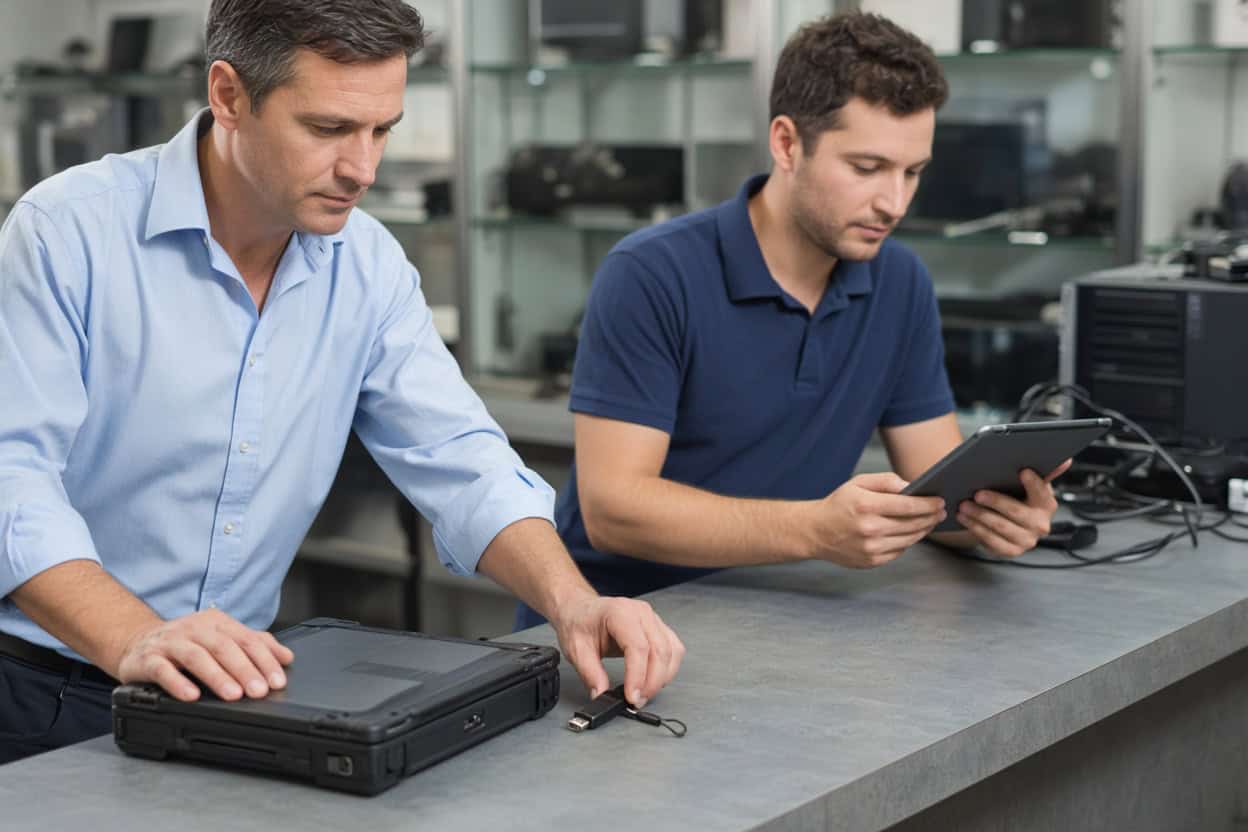
File Recovery at Our Fairfax Kiosk
The Fairfax kiosk is built for logical data loss, where the device still works but files have been deleted, a drive has been formatted, or a file system or operating system failure is blocking access. The data is almost always still physically present in these cases, which makes them very recoverable when handled carefully. The mistakes that ruin them are predictable: installing recovery software on the affected drive, saving recovered files back to it, or letting a repair utility rewrite it. The kiosk team avoids all of that by design.
Deleted photo recovery
Cherry blossoms on the Mall, a Wolf Trap concert, years of family albums on an aging desktop. Deleted photos generally stay on the storage until something new overwrites them. Stop using the card or drive and bring it in quickly for the best chance of recovery.
Deleted video recovery
Briefing recordings, training videos, recitals, drone footage, a wedding film. Large video files fragment across storage, so rebuilding them intact requires care. The kiosk recovers deleted video from cameras, laptops, external drives and memory cards and checks that each clip plays.
Deleted file recovery
Proposals, research data, spreadsheets, PDFs and tax documents can often be recovered after deletion, even with the Recycle Bin or Trash emptied. The sooner you stop using the drive, the better. The kiosk is a file recovery service: you hand over the device, and experienced staff handle the technical work.
Formatted drive recovery
Wiping the wrong disk during a reinstall, letting a console claim an external drive, or formatting an SD card in a different camera usually leaves the files intact beneath a new, empty index. Formatted drive recovery is routine kiosk work as long as the drive hasn’t been refilled.
RAW and missing partitions
A drive that shows as RAW, a partition that’s vanished, or a disk that won’t open until it’s formatted almost always has a damaged file system with the data still underneath. Leave the prompt alone and let the kiosk restore access.
Recovery from computers that won’t boot
Restart loops after an update, blue screens, a black screen with a blinking cursor, a Mac that stalls at startup. The drive and its files are usually fine. A reset or reinstall is what destroys them, so have the kiosk recover your data first.
Files lost during a laptop refresh
Company laptop swaps, home computer upgrades and sync tools that delete local copies leave plenty of Northern Virginia clients missing folders. In many cases the originals are still on the old drive.
Memory card and USB drive recovery
SD cards that read as empty, thumb drives that ask to be formatted, and microSD cards from dash cams or security cameras that lost their footage are kiosk jobs when they’re still detected. Physically broken or undetectable cards and drives need our lab.
Before Your Visit
The single most important step is to stop using the device. After that, avoid recovery software, decline every prompt to format, initialize or repair, and bring the cable or power adapter for any external drive. A short list of the folders or file types you need most helps the team focus on what matters.
Physical Failures Need the Lab
When the hardware itself fails, software can’t help, and repeatedly powering the device on can make recovery harder. Summer storms, power surges and the occasional spill send plenty of NoVA devices our way. These belong in our cleanroom:
- Hard drives that click, beep or grind
- External drives that were dropped
- Lightning, surge or wrong-adapter damage
- Water, spill or fire damage
- SSDs and flash drives that aren’t detected
- Failed NAS devices and RAID arrays
Phones go to the lab. The Fairfax kiosk doesn’t recover data from smartphones. Dead, cracked or water-damaged phones are handled by our engineers through chip-level phone data recovery.
Our Madison engineers open drives only inside ISO 5 cleanroom workstations, rebuild them with parts from a large donor library, and image failing drives with read-only tools we engineered ourselves. The Micro Center Fairfax service desk can take a first look and refer a damaged device to our data recovery lab, or you can ship it to us directly. Standard single-device cases in the continental US ship free with a prepaid label. The evaluation is free, and you pay only when we meet your recovery goals at a price that makes sense.
Not sure where to start?
Call 877-624-7206. Tell us what the device is doing and we’ll point you to Micro Center Fairfax or our lab.
Northern Virginia Data Recovery FAQ
Where can I get data recovery in Northern Virginia?
Our kiosk is inside Micro Center Fairfax on Nutley Street, convenient to Vienna, Tysons, Falls Church and Arlington. If you’re in the District or Maryland, our Rockville location may be closer. NoVA clients can also ship directly to our Madison lab with free inbound shipping on standard single-device cases.
I deleted a proposal folder from my laptop. Can it come back?
Usually, if the laptop hasn’t been heavily used since. Stop working on it and bring it in so nothing overwrites the files.
My computer shows a black screen with a blinking cursor. Is my data gone?
Not necessarily. That usually points to a boot problem rather than a failed drive. The kiosk can recover files from a healthy drive before anything is reinstalled; a failing drive goes to our lab.
How much does recovery cost?
It depends on the device and the situation. The evaluation is free, and you’ll approve a quote before recovery begins.
Do I need an appointment?
No. Walk up to the Fairfax service desk any time during store hours.
Can the kiosk recover my phone?
No. Phones go to our lab, where engineers recover data directly from the board. Start a phone case online or call 877-624-7206.
Can you handle sensitive or confidential files?
Yes. Files are opened only to recover and verify them. Gillware never sells or shares client data, and our lab regularly handles sensitive data for healthcare organizations and government agencies, with background-checked staff in a secure facility.
Serving Fairfax County and Northern Virginia
Our Micro Center Fairfax kiosk serves Fairfax, Vienna, Tysons, Oakton, Falls Church, Arlington, McLean, Reston, Herndon, Annandale, Springfield and Centreville. Everyday file loss is handled close to home, and failed hardware has Gillware’s cleanroom lab behind it. Walk in or ship it; it’s the same team either way.
Let’s get your files back, NoVA.
Drop off at Micro Center Fairfax, or send your device to our lab for a free evaluation.
- More than 20 years recovering data from failed drives
- Trusted by 1,500+ IT professionals nationwide
- Whatever failed, we’ve seen it hundreds of times
- Pay only if we meet your recovery goals (lab cases)